
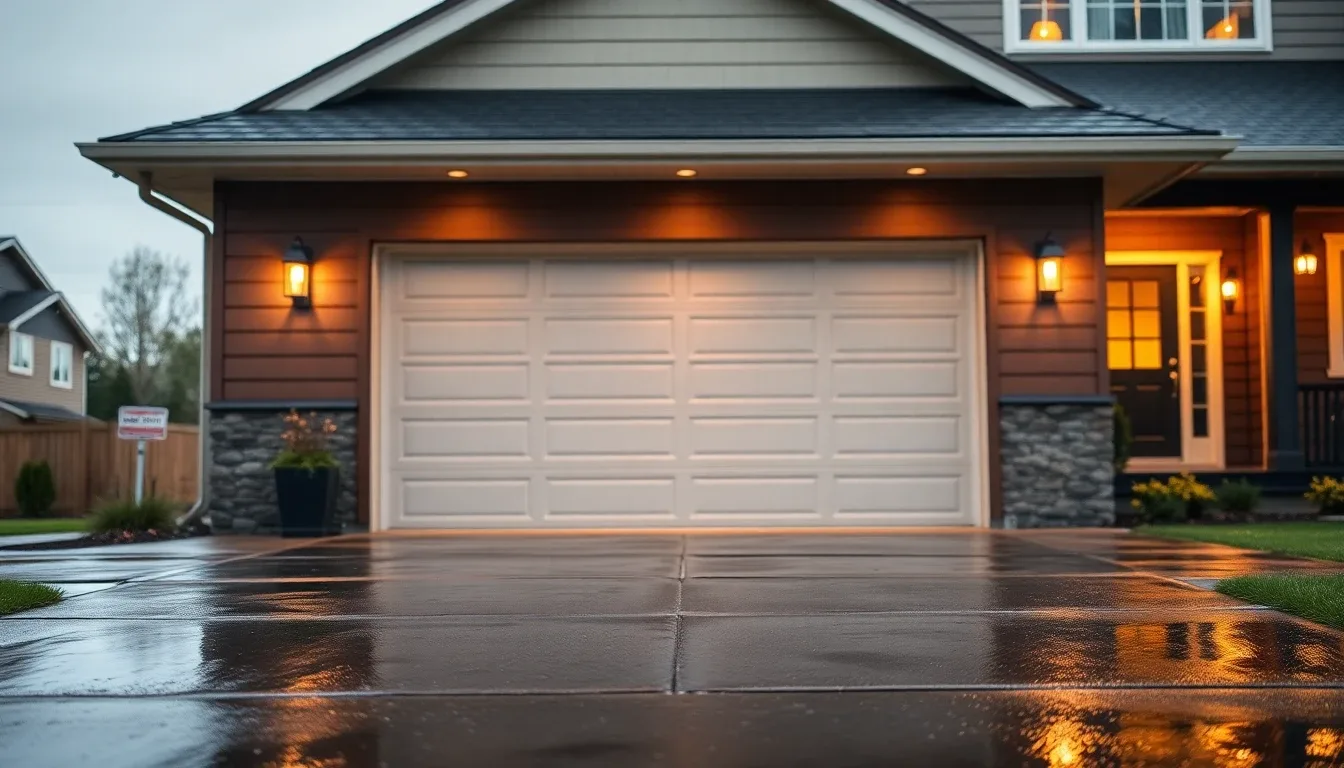
Every October, the calls start to change. In summer, a garage door that works is a garage door nobody thinks about. Once the rain settles in and the first windstorm knocks out power for an afternoon, the weak points show up. A sensor that worked fine in July now blinks at you. A door that closed smoothly now shudders. A gap along the floor lets in a stripe of water, and a spring that has been quietly wearing out finally lets go.
Garage doors in the Puget Sound region live a hard life. We get months of persistent moisture, cold snaps that stiffen lubricants and rubber, wind-driven rain, and in places like Redondo, Des Moines, Vashon and the Kitsap shoreline, salt air that attacks bare steel. Many homes in Seattle, Kent, Kirkland and Federal Way have an attached garage that doubles as a workshop, laundry room or storage space, so a failing door is not only an inconvenience. It can mean damp stored belongings, rodents coming in under a worn seal, or a door that won't close and leaves the house open.
This guide covers the parts that fail most often in our climate, what you can safely check yourself, and what you should leave to a trained technician.
Start With a Ten-Minute Walkthrough
You don't need tools for a useful inspection. Do this with the door closed, then again while the opener runs it through a full cycle.
- Watch and listen. The door should travel smoothly, without jerking, scraping or popping. Note any spot where it slows or shakes.
- Look at the bottom edge. Check for daylight, cracked rubber, or a seal that has flattened and curled.
- Check the rollers. Look for wobbling, flat spots, or stems that have worked partly out of the hinge.
- Inspect the springs. On a torsion system, look at the coil above the door for gaps or visible stretching. On an extension system, check the springs along the horizontal tracks.
- Examine the cables. Frayed strands or rust near the bottom brackets are a warning sign.
- Test the photo eyes. Check that both sensors show steady indicator lights.
- Try the keypad and remotes. Weak response often points to batteries, not the opener.
Once a year, put a 2x4 laid flat on the floor in the door's path. When the door touches it, the door should reverse. If it doesn't, stop using the automatic close function and call for service.
Garage Door Springs: The Part You Should Never DIY
The spring does the real lifting. A typical double-car door can weigh 150 to 250 pounds or more, and the springs counterbalance almost all of it so the opener only guides the door. Most residential springs are rated for around 10,000 cycles, which is one open and one close. If your household opens the door four times a day, that's about seven years. If you have teenagers, a home business, or leave and return multiple times a day, it can be much sooner.
Signs a Spring Is Wearing Out or Broken
- A loud bang from the garage, often described as sounding like something fell, followed by a door that won't lift.
- A visible gap in the torsion spring coil.
- The opener straining, groaning, or lifting only a few inches before stopping.
- The door feeling extremely heavy when you pull the red release cord and try lifting by hand.
- Rust along the coils, which is common near salt water.
Garage door spring replacement is not a good DIY project. A wound torsion spring holds enough stored energy to cause serious injury, and winding bars slipping out of the cone are behind a lot of emergency room visits. A professional replacement also includes more than the spring itself. The technician should match the wire size, inside diameter and length to your door's actual weight, check the center bearing plate and end bearings, inspect the cables and drums, and balance the door afterward.
If one spring breaks on a two-spring system, replace both. They have lived the same number of cycles, so the second is almost certainly near the end of its life. If you want more life from the new set, ask about higher-cycle springs rated for 15,000 to 25,000 cycles, which are worth it for busy households.
Garage Door Stuck Halfway: What It Usually Means
A door that stops partway up or down is one of the most common reasons people call us. If you're dealing with a garage door stuck halfway in Kent, WA, the cause is usually one of these:
- A broken or weakened spring. The opener lifts a few inches, then its force limit shuts it off.
- A door off track. A roller has popped out, often after a bump from a car or from wind pressure on a poorly secured door.
- A binding roller or hinge. Swollen or rusted hardware drags in the track.
- Opener force or travel limits drifting out of adjustment. The opener thinks the door has hit an obstruction or has reached the floor too early.
- A sensor problem on the way down. If the safety eyes are blocked or misaligned, the door may reverse partway.
- A cable that has slipped off its drum or snapped. The door goes up crooked, and it can jam in the track.
If the door is stuck partway open, keep people and vehicles out from under it. Don't force it. If you pull the red emergency release cord, do it only when the door is fully closed, or when it is held securely. A door with a broken spring can drop fast once disconnected from the opener. If the door is crooked, if you see a cable hanging loose, or if a roller is out of the track, stop and call for help. Forcing it can bend the track and turn a simple repair into a section replacement.
Kent's mix of older ramblers, townhomes and newer developments means we see all kinds of door ages and setups. One useful tip: if your door is more than 12 to 15 years old and still has its original springs, rollers and cables, a stuck door is often a sign that several worn parts are failing together, not just one.
Sensors: Small Parts, Big Frustration
The two photo eyes mounted about 4 to 6 inches above the floor on each side of the door are the most common source of "my opener blinks and won't close" calls. They send an invisible infrared beam across the opening. If something interrupts it, or the beam can't reach the receiver, the opener refuses to close the door by remote or wall control. Often it will flash its lights as a warning.
Common Sensor Problems in Our Climate
- Misalignment. A bump from a bike, a trash can, or a slightly bent bracket is enough. Both sensors should have steady lights. A blinking or dark light on one side means the aim is off or the wiring is damaged.
- Moisture and condensation. Wet lenses, especially on north-facing garages, can scatter the beam.
- Spiderwebs and debris. Spiders love the warm lens housing. Wipe both lenses with a soft dry cloth.
- Low-angle sun. In fall and winter, the sun can shine directly into a lens at dawn or dusk. A small shade or cardboard tube over the sensor sometimes helps.
- Damaged or pinched low-voltage wire. The thin wire running to the sensors can be nicked by staples, pinched by a bracket, or chewed by rodents.
- Corroded terminals. Especially common in damp or salty conditions.
Homeowners looking for garage door sensor repair in Redondo, Federal Way often find that salt-laden air has corroded the terminal screws or bracket hardware, which causes an intermittent fault that comes and goes with the weather. Meanwhile, garage door sensor repair in Algona, WA is often a different story, such as older wiring, a sensor knocked loose by stored items, or alignment that drifted as an older garage floor and framing shifted. In both cases, a technician will test the wiring, check voltage at the opener terminals, and replace the sensor pair if needed instead of guessing.
Please don't bypass or disable the sensors, even temporarily. They are a federally required safety feature on openers made since 1993, and they protect kids, pets and anything else under a closing door.
Rollers, Tracks and the "Noisy Door" Problem
If your door has started to sound like a freight train, the rollers are the first suspect. Most builder-grade doors come with basic steel or plastic rollers with few or no ball bearings. They wear out, flat-spot, and seize up. Nylon rollers with sealed ball bearings, commonly 10 or 13 bearings, are much quieter, last longer, and run smoother in damp weather.
For garage door roller replacement in Burien, we typically recommend replacing all of them at once, usually 8 to 10 on a standard double door, along with a check of the hinges. Replacing only the loudest one leaves the rest worn, and old hinges can wobble in a way that wears the new rollers quickly.
A few points from the field:
- Don't lubricate the track. It attracts dust and pollen and creates a gummy mess. Clean the track with a rag and mild cleaner, and lubricate the rollers' bearings, hinges and spring with a garage door lubricant, not a heavy grease.
- Bottom roller brackets are under high tension. They hold the lifting cable, so they should not be loosened without proper training.
- Worn rollers can contribute to a stuck door. A roller with a damaged stem can bind, jump the track, or cause uneven lifting.
- Rust is a clue. If the track or hinges are rusting in less than a decade, the garage may have a ventilation or moisture problem worth looking into.
Seals and Retainers: Keeping Rain, Cold and Critters Out
Seals matter more in western Washington than almost anywhere else in the country. Wind-driven rain pushes water under and around the door, and a garage with a gap at the floor invites mice and insects as well.
Bottom Seal, Retainer and Threshold: What's the Difference?
People often use these terms interchangeably, but they're different parts:
- Bottom seal (or bottom astragal): the flexible rubber or vinyl strip along the bottom edge of the door. Common types include T-style, bulb-style and beaded.
- Bottom retainer: the aluminum or plastic track channel fastened to the door that holds the seal in place. A bent, corroded or cracked retainer can leave the seal sagging no matter how new it is.
- Threshold seal: a vinyl or rubber strip attached to the garage floor that the door presses against. It's useful when the slab is uneven, which is common on older sloping driveways.
For garage door bottom seal replacement, measure the width of your door (typically 8, 9, 16 or 18 feet) and look at the end of your existing seal to see which profile you have. T-style seals slide into a double-channel retainer, while a bulb seal fits a single channel. Winter cold can make an old seal hard and brittle. Pulling it out may crack it, so work slowly, and clean out the channel with a rag before inserting the new one. A little soapy water on the seal helps it slide in.
If the seal is fine but keeps falling out, the retainer is probably bent or the fasteners have corroded. That is where garage door bottom retainer replacement in Kirkland comes in. We see this a lot on doors that have been bumped by a vehicle, as well as on older steel doors where moisture collected at the bottom edge and corroded the metal around the retainer.
On uneven floors, garage door threshold seal installation in Federal Way homes can fill the gap that a bottom seal alone can't. Clean the concrete thoroughly, let it dry completely (not easy in November), and use a compatible adhesive rated for concrete and low temperatures. Applying one on a damp slab is the most common reason these peel away within a season.
Weather Stripping Around the Sides and Top
The vinyl stop molding on the jambs and header seals the perimeter when the door is closed. On many Pacific Northwest homes, the wooden jamb or trim behind it is the real concern, because rot and swelling develop from constant moisture. For garage door weather seal installation in Monroe, WA, where rain and river valley dampness are a regular part of life, we check the trim condition first. New weatherstripping nailed onto soft, rotted wood won't hold, and you may need to replace or patch the jamb before sealing the door properly. The seal should lightly touch the door face along its whole length without pressing so hard that it creates drag for the opener.
Keypads, Remotes and Power Outages
Windstorms and outages are part of life here, and the keypad gets more important when the power flickers. A working keypad means you don't need to rely on a remote left in the car, and it gives kids and guests a way in.
A keypad that's dead or inconsistent is usually one of three things: dead batteries (a 9-volt or a coin cell, depending on the model), moisture that has gotten behind the cover, or a unit that has lost its pairing with the opener. If new batteries and reprogramming (usually by pressing the "learn" button on the opener's motor head, then entering a PIN on the keypad) don't help, it's time for replacement.
For garage door keypad replacement in Tukwila, we usually suggest a weather-rated wireless keypad that's compatible with the opener's brand and frequency. Some older openers use fixed codes or older radio technology that newer keypads don't support, so it's worth confirming compatibility before buying one. Mount it out of direct rain, at a height people can reach, and change your PIN from the factory default.
Also remember the manual release. After an outage, you should know how to disconnect the door from the opener and operate it by hand, but only if the springs and cables are in good condition.
A Simple Seasonal Schedule
- Every month: wipe the sensor lenses, check the seal and run the door with the 2x4 test.
- Every 6 months: lubricate rollers, hinges and springs, tighten loose hardware, and test the keypad battery.
- Every year: have a technician check balance, cables, springs and opener force settings.
- Every 7 to 10 years: plan for roller replacement, and expect to replace springs depending on use.
Frequently Asked Questions
How do I know if my garage door spring is broken?
You may hear a loud bang, see a gap in the coil, or find that the door only lifts a few inches before the opener stops. If you disconnect the opener and the door feels extremely heavy by hand, the spring is likely done. Don't try to repair it yourself.
Why does my garage door reverse before it closes?
The usual causes are misaligned or dirty sensors, an obstruction in the beam, or opener force and limit settings that need adjusting. Check the sensor lights first. If both are steady and the door still reverses, call for diagnosis.
Can I replace just the bottom seal, or do I need a new retainer too?
If the retainer is straight and intact, you can usually replace just the seal. If the retainer is bent, cracked or rusted, replace it at the same time or the new seal won't sit correctly.
How often should garage door rollers be replaced?
Roughly every 7 to 10 years under normal use. Replace them sooner if the door is noisy, shaky, or the rollers are visibly worn. Nylon rollers with sealed bearings generally last longer than basic steel ones.
Does salt air really affect my garage door?
Yes. Homes near Puget Sound, including parts of Redondo, Des Moines, Vashon and the Kitsap coast, see faster corrosion on springs, hinges, tracks, screws and sensor terminals. Regular lubrication and rinsing hardware can slow it, but corroded springs and fasteners should be replaced rather than ignored.
Is it safe to use my garage door if the sensor is flashing?
It's safest to get it fixed. You can use the door manually, but don't tape or bypass the sensors. They exist to prevent injuries.
Get the Door Working Before the Next Storm
A garage door is the largest moving object in most homes, and in this climate it needs more attention than people give it. Most of the repairs above are far cheaper when caught early, before a worn roller damages a track or a failing spring takes out the opener. Anderson's Garage Door Company is locally owned and serves King, Snohomish, Pierce and Kitsap counties, from Federal Way, Kent and Burien to Kirkland, Tukwila and Monroe. Whether you need a sensor fixed, a seal installed, a keypad replaced or a broken spring dealt with safely, call us at (253) 453-8862 and we'll get your door moving smoothly again.
Need this fixed today? We're local and ready.
Free phone estimates · Same-day service · 24/7 emergency line · Licensed, bonded & insured
Call (253) 453-8862