
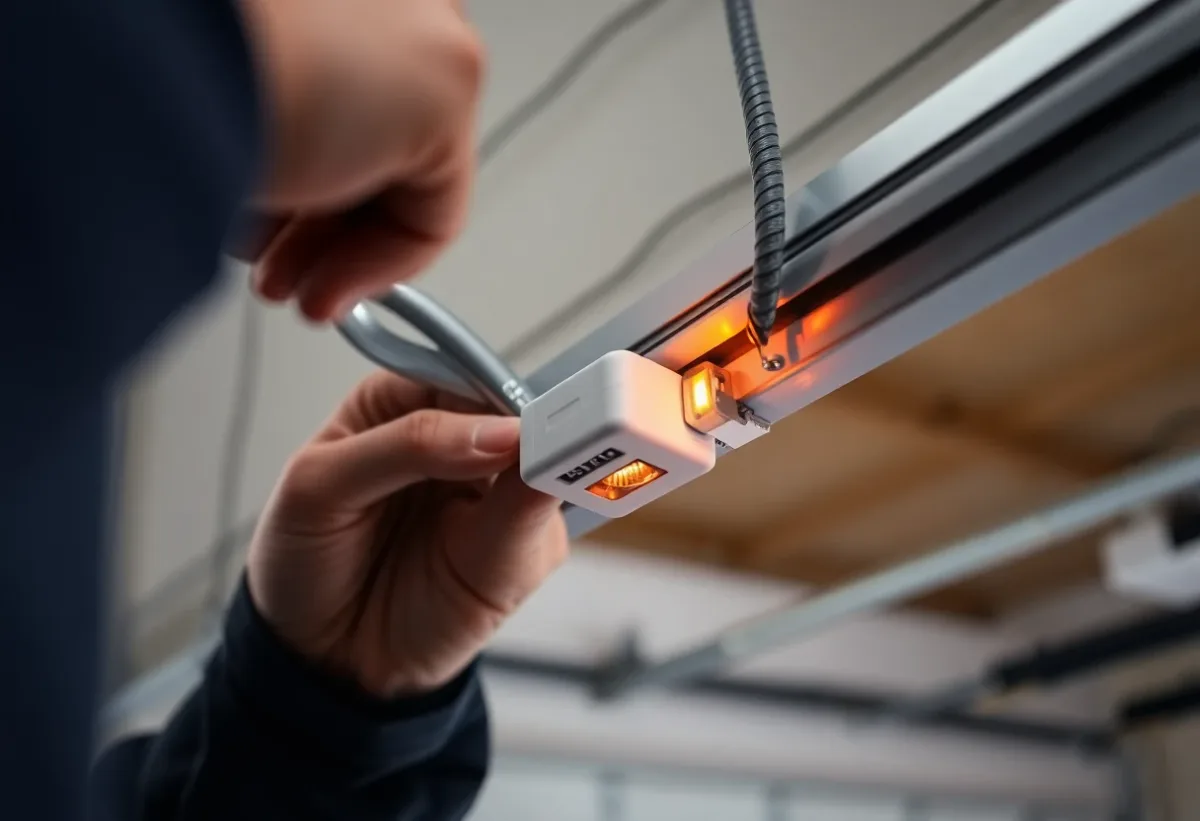
Anderson's Garage Door Company provides sensor wiring repair throughout Seattle and the Puget Sound region — chewed, pinched, or corroded low-voltage wiring fixes — with same-day availability and flat, quoted-in-advance pricing.
As part of our garage door sensor repair line, sensor wiring repair is everyday work for Anderson's — which means fast diagnosis, on-truck parts, and pricing without padding.
One call to (253) 453-8862 gets you a real local technician, a clear quote, and in most cases a same-day fix.
About sensor wiring repair
In plain terms: chewed, pinched, or corroded low-voltage wiring fixes. Homeowners often discover they need it only after a louder, more expensive failure — which is why we check for the early signs on every service call.
We never treat sensor wiring repair in isolation. The technician verifies door balance, opener force settings, and hardware condition so the repair holds — and so you're not surprised by a related failure a month later.
If your door is hanging crooked, has a visibly separated spring, or has a cable dangling loose, stop using it immediately. Operating a compromised door can bend tracks, strip opener gears, and turn a modest repair into a full replacement.
Our garage door sensor repair process, step by step
We've refined this process over thousands of service calls across the Puget Sound region, and it's built to respect your time and your budget.
1. Honest phone diagnosis
Tell our dispatcher what the door is doing. Nine times out of ten we can identify the likely failure and quote a realistic price range before a truck ever leaves the shop.
2. A real arrival window
We schedule tight windows and call when the technician is on the way — no vague "sometime between 8 and 5" promises.
3. Full-system inspection
Before touching anything we inspect the complete system — springs, cables, rollers, tracks, hinges, opener, and safety devices — because single-part failures usually have company.
4. Flat-rate quote, then work
You approve a flat price before work begins. Parts come off the truck for most repairs, and the fix is completed the same visit.
5. Test, tune, and clean up
Every job ends with balance testing, opener force and travel calibration, safety-reverse checks, full lubrication, and a clean garage floor.
The seven parts that make or break your garage door
A garage door looks simple from the driveway, but it's a balanced machine of counteracting forces — and when one component weakens, the others absorb the load until something gives. Understanding the system helps you describe problems accurately on the phone and spot trouble early. Here's what's working every time your door cycles in Northwest garages:
Springs: the muscle
Torsion or extension springs counterbalance the door's full weight — often 150–350 pounds — so a motor rated like a blender can lift it. Springs are consumables rated in cycles, and they are always the most dangerous part to touch.
Cables and drums: the transmission
Cables transfer spring force to the bottom corners of the door. They stretch and corrode in our damp climate, and because they fail in pairs' worth of tension, we always replace them as a matched set.
Rollers and tracks: the guide rails
The tracks don't bear the door's weight — the springs do — but they define its path. A quarter-inch of misalignment is audible; a half-inch binds the door entirely.
Hinges and panels: the body
Each panel joint flexes on every cycle. Dry hinges squeal first, crack second — and a failed hinge lets panels pinch, bind, and crease under load.
The opener: the brain
Modern openers add rolling-code security, battery backup, and app control — but they still assume a balanced door. An opener dragging an unbalanced door burns out years early.
Safety systems: the guardian
Photo eyes six inches off the floor and force-reversal settings are what stop a closing door from striking a child, pet, or bumper. Federal law has required them since 1993, and we test them on every single visit.
Weather seals: the envelope
Seals are the only part of the system facing the weather full-time. In our climate they harden and flatten in a few years, and replacing them is one of the highest-value small jobs we do.
Need a garage door fixed today?
Free phone estimates · Same-day service · 24/7 emergency line · Licensed, bonded & insured
Call (253) 453-8862Why this matters in Western Washington
Puget Sound windstorms flex wide doors in their tracks, power outages strand openers mid-cycle, and months of damp air quietly corrode cables from the inside out — which is why local experience matters when diagnosing a door.
That climate is exactly why sensor wiring repair comes up more often here than national averages suggest — and why we treat it as core work rather than an exotic request.
What you can do yourself — and what to leave to us
We'd rather tune your door once a year than replace its parts twice as often. Between professional visits, this simple homeowner routine catches most problems while they're still cheap:
Monthly: watch and listen
Run the door and pay attention. New noises — grinding, popping, squealing — are the earliest warning you'll get. Watch for hesitation, shuddering in the track curve, or one side lagging the other.
Monthly: test the safety reverse
Block the photo eyes while the door closes (it should reverse immediately) and close onto a board laid flat on the floor (it should spring back). These two tests take one minute and are the ones that protect kids and pets.
Twice a year: lubricate the right way
Spring and fall, hit every pivot point with garage-door lube: hinge knuckles, steel roller bearings, spring coils, and the lock mechanism. Skip the tracks themselves — they should be clean and dry, not greasy.
Twice a year: check the balance
With the door closed, pull the red release cord and lift the door halfway by hand. It should float there. If it slams down or flies up, spring tension is off — reconnect the opener and book a tune-up; an unbalanced door is quietly destroying its opener.
Yearly: professional tune-up
Once a year, let a technician do what homeowners safely can't: set spring tension, calibrate opener force and travel, and torque the hardware. It's the cheapest insurance a garage door can buy.
Why waiting makes it worse (and more expensive)
Garage door failures cascade. A door with worn rollers runs crooked; a crooked door side-loads its cables; strained cables chew their drums; and the opener drags the whole mess until its gear strips. What starts as a $85-class visit becomes a multi-component repair — we see the pattern weekly, and it's the most preventable money in this trade.
There's also the stuck-at-the-worst-moment factor: doors don't fail at convenient times. They fail at 7 AM with your car inside, or at 11 PM stuck open in the rain. A planned repair this week beats an emergency call next month on both price and stress.
The free move: call (253) 453-8862 and describe the symptom. The phone diagnosis costs nothing, and if it's genuinely safe to wait, we'll tell you that too.
Straightforward pricing for garage door sensor repair
Most garage door sensor repair jobs across our service area land between $85 and $220. Where your job falls in that range depends on door size and weight, the parts tier you choose, and how much neighboring hardware needs attention at the same time.
Beware of "$39 service call" ads — that model makes its money on pressure upsells once a tech is in your garage. Our approach is the opposite: a real quote up front, options explained plainly, and the final invoice matching the approved number.
We're licensed, bonded, and insured in Washington State, and our technicians are employees we've trained and background-checked ourselves.
Available across the Puget Sound region
We provide sensor wiring repair everywhere we operate: Kirkland, Bainbridge Island, Mercer Island, Tukwila, Puyallup, Bellevue, and the rest of our four-county service area. Same-day appointments are usually available — call (253) 453-8862.
The Anderson's difference
Anderson's Garage Door Company is a locally owned company based on Aurora Avenue North in Seattle — not a national call center — and every repair is handled by our own background-checked technicians, never subcontractors.
We maintain a 4.9-star average across hundreds of local reviews, and most of our new customers come from neighbor referrals — the strongest signal there is in a trades business.
We quote flat, upfront pricing before work begins — the number you approve is the number you pay, with no trip-charge surprises when you proceed with the repair. One call to (253) 453-8862 gets you a real local technician, a clear quote, and in most cases a same-day fix.
And because we're local, accountability is real: the technician who fixes your door this year is the company you'll call next year. That long-game incentive — rare in an industry full of lead-generation fronts — is why we'd rather under-promise, over-deliver, and earn the next referral on your street.
Frequently asked questions
Can I get same-day garage door sensor repair?
Usually, yes. Call (253) 453-8862 before early afternoon and we can typically have a technician out the same day. Emergency situations — doors stuck open, vehicles trapped — are prioritized around the clock.
Why is my sensor light blinking?
A blinking photo eye almost always means the pair is out of alignment or something is interrupting the beam — a leaf, cobweb, or a bumped bracket. If cleaning and gentle realignment don't restore a solid light, the sensor or its wiring has failed and we replace it.
Can I bypass the safety sensors?
Holding the wall button closes the door with sensors bypassed, but it's a stopgap — not a fix. Sensors are a federally required safety system; we restore them properly so the door protects kids, pets, and bumpers the way it's designed to.
How much does garage door sensor repair cost?
Most garage door sensor repair jobs run between $85 and $220, depending on door size, parts quality, and how much related hardware needs attention. We give you a firm, flat quote before starting — the price you approve is the price you pay.
Do you service all brands for garage door sensor repair?
We work on every major residential brand — LiftMaster, Chamberlain, Genie, Craftsman, and Marantec openers; Clopay, Amarr, Wayne Dalton, C.H.I., and Raynor doors — plus builder-grade and discontinued brands found in older Puget Sound homes.
How long does garage door sensor repair take?
Most appointments are finished in 60–120 minutes. Our trucks carry the common parts for every major brand, so the overwhelming majority of garage door sensor repair calls are completed in a single visit.
Do you warranty garage door sensor repair work?
Yes. Labor is covered by our written workmanship warranty, and parts carry their manufacturer warranties — which we register on your behalf. If something we installed misbehaves, we come back and make it right.
Is it safe to use my door until the technician arrives?
If the door is crooked, a spring is visibly separated, or a cable is hanging loose — stop using it. Running a compromised door can bend tracks and strip opener gears, turning a modest repair into a much bigger one. Disconnect the opener and leave the door where it is until we arrive.
Ready when you are — 7 days a week, 7:00 AM – 9:00 PM (24/7 emergency line)
Free phone estimates · Same-day service · 24/7 emergency line · Licensed, bonded & insured
Call (253) 453-8862