
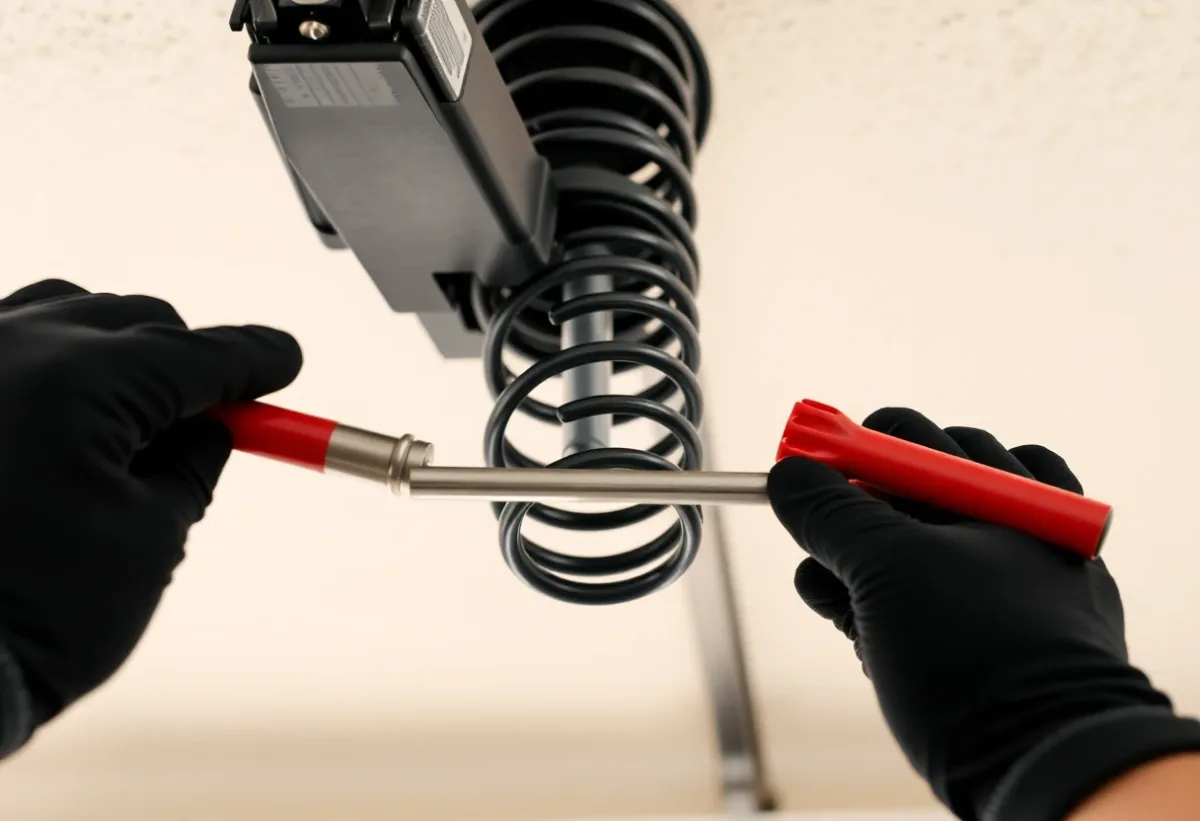
For garage door spring broke, Puget Sound homeowners call Anderson's: local technicians, stocked trucks, and a 4.9-star service record built one driveway at a time.
We serve the entire Puget Sound region — Seattle, the Eastside, South King County, Snohomish County, Pierce County, and the Kitsap Peninsula — from our shop on Aurora Avenue North.
One call to (253) 453-8862 gets you a real local technician, a clear quote, and in most cases a same-day fix.
Everything this covers
When Anderson's books this job, the technician arrives prepared for the full scope around it:
Torsion Spring Replacement
Matched torsion spring pairs sized to your exact door weight.
Extension Spring Replacement
Extension springs with safety cables on older door systems.
High-Cycle Spring Upgrades
25,000–50,000 cycle springs for busy households.
Extension-to-Torsion Conversion
Converting old extension setups to safer torsion systems.
Door Balance Adjustment
Fine-tuning spring tension so the door floats at half height.
What to expect when you call us for garage door spring replacement
From first call to final test, here's exactly how a garage door spring replacement appointment goes with Anderson's.
1. Honest phone diagnosis
Tell our dispatcher what the door is doing. Nine times out of ten we can identify the likely failure and quote a realistic price range before a truck ever leaves the shop.
2. A real arrival window
You get a specific window, a heads-up call en route, and a technician in a marked Anderson's truck — not a stranger in an unmarked van.
3. Full-system inspection
The technician checks the entire door, not just the obvious broken part, so the quote you approve reflects everything the door actually needs — and nothing it doesn't.
4. Flat-rate quote, then work
You approve a flat price before work begins. Parts come off the truck for most repairs, and the fix is completed the same visit.
5. Test, tune, and clean up
We cycle the door repeatedly, verify the safety systems, lubricate every moving part, and walk you through what was done before we leave.
Understanding your garage door system
A garage door looks simple from the driveway, but it's a balanced machine of counteracting forces — and when one component weakens, the others absorb the load until something gives. Understanding the system helps you describe problems accurately on the phone and spot trouble early. Here's what's working every time your door cycles in Northwest garages:
Springs: the muscle
Torsion or extension springs counterbalance the door's full weight — often 150–350 pounds — so a motor rated like a blender can lift it. Springs are consumables rated in cycles, and they are always the most dangerous part to touch.
Cables and drums: the transmission
Steel lift cables wind onto grooved drums at each top corner, converting spring torque into even lift. A frayed strand today is a snapped cable next month — and a snapped cable drops one side of the door instantly.
Rollers and tracks: the guide rails
Ten or more rollers carry the door through vertical and horizontal track. Worn rollers wobble, grind, and eventually hop the track — the number-one cause of crooked, jammed doors.
Hinges and panels: the body
Each panel joint flexes on every cycle. Dry hinges squeal first, crack second — and a failed hinge lets panels pinch, bind, and crease under load.
The opener: the brain
The motor head, drive (belt, chain, or screw), logic board, and travel/force settings automate the door. Most 'opener failures' we diagnose are actually door problems forcing the opener past its limits.
Safety systems: the guardian
Photo eyes six inches off the floor and force-reversal settings are what stop a closing door from striking a child, pet, or bumper. Federal law has required them since 1993, and we test them on every single visit.
Weather seals: the envelope
Bottom rubber, jamb stripping, and the header seal keep Puget Sound rain, drafts, and rodents outside. Flattened seals show up as puddles, pests, and cold garages — cheap to fix, expensive to ignore.
Need a garage door fixed today?
Free phone estimates · Same-day service · 24/7 emergency line · Licensed, bonded & insured
Call (253) 453-8862Service area: the entire Puget Sound region
From our Seattle shop at 12714 Aurora Avenue N, we dispatch daily across King, Snohomish, Pierce, and Kitsap counties: Seattle, Shoreline, Bellevue, Kirkland, Redmond, Renton, Kent, Federal Way, Auburn, Tacoma, Everett, Lynnwood, Edmonds, Bothell, and dozens of surrounding communities.
Each city page on this site covers local response times, common door types, and neighborhood coverage — or just call (253) 453-8862 and our dispatcher will confirm your address and give you a real arrival window.
Puget Sound windstorms flex wide doors in their tracks, power outages strand openers mid-cycle, and months of damp air quietly corrode cables from the inside out — which is why local experience matters when diagnosing a door.
A homeowner's garage door maintenance guide
A few minutes of seasonal attention dramatically extends the life of every component above. Here's the routine we recommend to customers — all of it safe for homeowners, none of it requiring tools near a loaded spring:
Monthly: watch and listen
Run the door and pay attention. New noises — grinding, popping, squealing — are the earliest warning you'll get. Watch for hesitation, shuddering in the track curve, or one side lagging the other.
Monthly: test the safety reverse
Lay a 2x4 flat where the door closes — the door should reverse within two seconds of touching it. Then wave an object through the photo-eye beam while closing; the door should reverse instantly. If either test fails, stop using the opener and call us.
Twice a year: lubricate the right way
A garage-door-specific silicone or white lithium spray on hinges, roller bearings (not nylon wheels), springs, and the opener rail — never WD-40, which strips lubricant and attracts grit. Wipe the excess; drips collect dust into grinding paste.
Twice a year: check the balance
The half-open float test is the single best health check: disconnect the opener (door fully closed first), raise the door halfway, and let go. Drifting down means tired springs. Leave the adjustment to us — that's stored-energy territory.
Yearly: professional tune-up
Our 25-point service — inspection, lubrication, balance and force calibration, hardware tightening, and safety testing — runs about what one hour of emergency service costs, and it's the reason our maintenance customers almost never make emergency calls.
Why waiting makes it worse (and more expensive)
The mechanical truth about garage doors: no failure stays contained. Every cycle on a compromised system transfers stress to healthy parts. The difference between calling at the first grinding noise and calling after the door stops entirely is routinely several hundred dollars.
Then there's security and weather: a door that won't fully close is an open invitation through months of Northwest rain. Most of the calls we run as emergencies gave weeks of polite warning first.
The free move: call (253) 453-8862 and describe the symptom. The phone diagnosis costs nothing, and if it's genuinely safe to wait, we'll tell you that too.
What garage door spring replacement costs across our service area
Expect $185–$495 for typical garage door spring replacement work across our service area. Door dimensions, part quality (standard versus high-cycle or corrosion-resistant), and the condition of surrounding hardware move the number within that range.
Beware of "$39 service call" ads — that model makes its money on pressure upsells once a tech is in your garage. Our approach is the opposite: a real quote up front, options explained plainly, and the final invoice matching the approved number.
Every repair we perform is covered by a written workmanship warranty, and the parts we install carry manufacturer warranties we register for you.
What makes Anderson's Garage Door Company different
Anderson's Garage Door Company is a locally owned company based on Aurora Avenue North in Seattle — not a national call center — and every repair is handled by our own background-checked technicians, never subcontractors.
Our reviews average 4.9 stars, and we've earned them one driveway at a time: showing up when we said we would, charging what we quoted, and fixing doors so they stay fixed.
Every repair we perform is covered by a written workmanship warranty, and the parts we install carry manufacturer warranties we register for you. Reach us at (253) 453-8862 any day of the week; emergency calls are answered around the clock.
Finally, we keep it simple to reach us: one local number, (253) 453-8862, answered by people who can actually book, quote, and dispatch — no phone trees, no "a representative will contact you," no lead resellers. The company you call is the company that shows up.
Frequently asked questions
How long does garage door spring replacement take?
Most appointments are finished in 60–120 minutes. Our trucks carry the common parts for every major brand, so the overwhelming majority of garage door spring replacement calls are completed in a single visit.
How much does garage door spring replacement cost?
Most garage door spring replacement jobs run between $185 and $495, depending on door size, parts quality, and how much related hardware needs attention. We give you a firm, flat quote before starting — the price you approve is the price you pay.
Is it safe to use my door until the technician arrives?
If the door is crooked, a spring is visibly separated, or a cable is hanging loose — stop using it. Running a compromised door can bend tracks and strip opener gears, turning a modest repair into a much bigger one. Disconnect the opener and leave the door where it is until we arrive.
How many cycles do garage door springs last?
Standard springs are rated around 10,000 cycles — roughly 7–10 years for a typical family. We stock high-cycle springs rated for 25,000 or more cycles for busy households; the upgrade typically adds modestly to the job but doubles or triples spring life.
Can I get same-day garage door spring replacement?
Usually, yes. Call (253) 453-8862 before early afternoon and we can typically have a technician out the same day. Emergency situations — doors stuck open, vehicles trapped — are prioritized around the clock.
Should I replace both springs if only one broke?
On a two-spring door, yes. Both springs have endured the same cycle count, so the survivor almost always fails within months — and a new spring paired with a fatigued one unbalances the door. Replacing the pair costs modestly more and avoids a second service call.
Do you service all brands for garage door spring replacement?
We work on every major residential brand — LiftMaster, Chamberlain, Genie, Craftsman, and Marantec openers; Clopay, Amarr, Wayne Dalton, C.H.I., and Raynor doors — plus builder-grade and discontinued brands found in older Puget Sound homes.
Do you warranty garage door spring replacement work?
Yes. Labor is covered by our written workmanship warranty, and parts carry their manufacturer warranties — which we register on your behalf. If something we installed misbehaves, we come back and make it right.
Ready when you are — 7 days a week, 7:00 AM – 9:00 PM (24/7 emergency line)
Free phone estimates · Same-day service · 24/7 emergency line · Licensed, bonded & insured
Call (253) 453-8862