
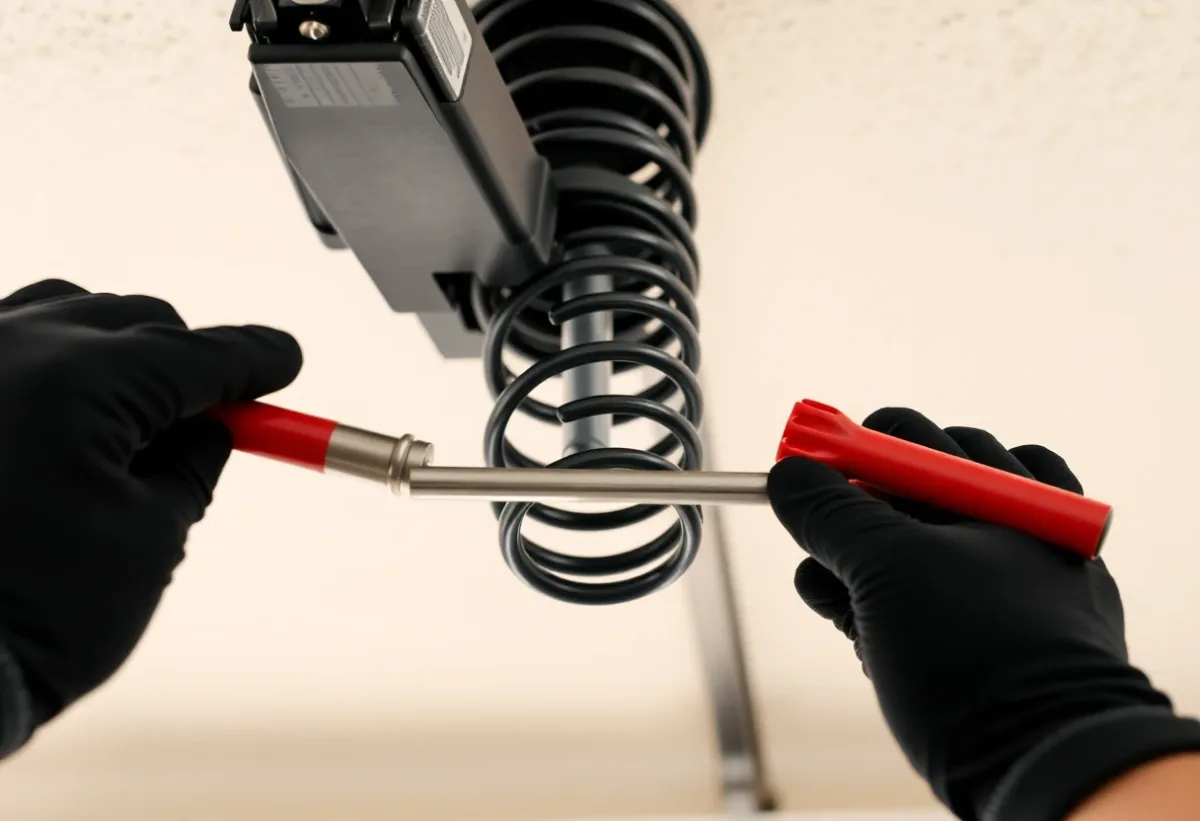
Anderson's Garage Door Company provides professional broken garage door spring repair — same-day in most cases, with flat pricing quoted before work begins and a written warranty after it's done.
From Everett to Puyallup and Bainbridge Island to North Bend, our trucks cover the whole metro area with the same flat pricing and same-day goal.
Dial (253) 453-8862 and tell us what the door is doing — our dispatcher will give you an honest time window and a price range on the spot.
What's included in this service
When Anderson's books this job, the technician arrives prepared for the full scope around it:
Torsion Spring Replacement
Matched torsion spring pairs sized to your exact door weight.
Extension Spring Replacement
Extension springs with safety cables on older door systems.
High-Cycle Spring Upgrades
25,000–50,000 cycle springs for busy households.
Extension-to-Torsion Conversion
Converting old extension setups to safer torsion systems.
Door Balance Adjustment
Fine-tuning spring tension so the door floats at half height.
How our garage door spring replacement process works
We've refined this process over thousands of service calls across the Puget Sound region, and it's built to respect your time and your budget.
1. Honest phone diagnosis
Tell our dispatcher what the door is doing. Nine times out of ten we can identify the likely failure and quote a realistic price range before a truck ever leaves the shop.
2. A real arrival window
You get a specific window, a heads-up call en route, and a technician in a marked Anderson's truck — not a stranger in an unmarked van.
3. Full-system inspection
The technician checks the entire door, not just the obvious broken part, so the quote you approve reflects everything the door actually needs — and nothing it doesn't.
4. Flat-rate quote, then work
You approve a flat price before work begins. Parts come off the truck for most repairs, and the fix is completed the same visit.
5. Test, tune, and clean up
Every job ends with balance testing, opener force and travel calibration, safety-reverse checks, full lubrication, and a clean garage floor.
Understanding your garage door system
Most homeowners never think about the machinery overhead until it stops. In reality, every door cycle coordinates a half-dozen subsystems, and the failure you can see is often caused by a part you can't. Here's the system our technicians evaluate on every call in Northwest garages:
Springs: the muscle
Torsion or extension springs counterbalance the door's full weight — often 150–350 pounds — so a motor rated like a blender can lift it. Springs are consumables rated in cycles, and they are always the most dangerous part to touch.
Cables and drums: the transmission
Cables transfer spring force to the bottom corners of the door. They stretch and corrode in our damp climate, and because they fail in pairs' worth of tension, we always replace them as a matched set.
Rollers and tracks: the guide rails
Ten or more rollers carry the door through vertical and horizontal track. Worn rollers wobble, grind, and eventually hop the track — the number-one cause of crooked, jammed doors.
Hinges and panels: the body
Hinges let the door bend around the track's curve; panels give it structure. A cracked hinge telegraphs clicking sounds, while a sagging top panel strains the opener bracket it carries.
The opener: the brain
The motor head, drive (belt, chain, or screw), logic board, and travel/force settings automate the door. Most 'opener failures' we diagnose are actually door problems forcing the opener past its limits.
Safety systems: the guardian
Photo eyes six inches off the floor and force-reversal settings are what stop a closing door from striking a child, pet, or bumper. Federal law has required them since 1993, and we test them on every single visit.
Weather seals: the envelope
Seals are the only part of the system facing the weather full-time. In our climate they harden and flatten in a few years, and replacing them is one of the highest-value small jobs we do.
Need a garage door fixed today?
Free phone estimates · Same-day service · 24/7 emergency line · Licensed, bonded & insured
Call (253) 453-8862Service area: the entire Puget Sound region
From our Seattle shop at 12714 Aurora Avenue N, we dispatch daily across King, Snohomish, Pierce, and Kitsap counties: Seattle, Shoreline, Bellevue, Kirkland, Redmond, Renton, Kent, Federal Way, Auburn, Tacoma, Everett, Lynnwood, Edmonds, Bothell, and dozens of surrounding communities.
Each city page on this site covers local response times, common door types, and neighborhood coverage — or just call (253) 453-8862 and our dispatcher will confirm your address and give you a real arrival window.
Western Washington's long wet season is harder on garage doors than most homeowners realize: moisture creeps into bottom sections, swells wood jambs, corrodes exposed springs, and washes lubricant out of rollers and hinges.
A homeowner's garage door maintenance guide
A few minutes of seasonal attention dramatically extends the life of every component above. Here's the routine we recommend to customers — all of it safe for homeowners, none of it requiring tools near a loaded spring:
Monthly: watch and listen
Cycle the door and simply observe: smooth and quiet is healthy. Scraping, slapping, or a door that pauses mid-travel means wear is active and worth a phone call before it compounds.
Monthly: test the safety reverse
Lay a 2x4 flat where the door closes — the door should reverse within two seconds of touching it. Then wave an object through the photo-eye beam while closing; the door should reverse instantly. If either test fails, stop using the opener and call us.
Twice a year: lubricate the right way
A garage-door-specific silicone or white lithium spray on hinges, roller bearings (not nylon wheels), springs, and the opener rail — never WD-40, which strips lubricant and attracts grit. Wipe the excess; drips collect dust into grinding paste.
Twice a year: check the balance
The half-open float test is the single best health check: disconnect the opener (door fully closed first), raise the door halfway, and let go. Drifting down means tired springs. Leave the adjustment to us — that's stored-energy territory.
Yearly: professional tune-up
Once a year, let a technician do what homeowners safely can't: set spring tension, calibrate opener force and travel, and torque the hardware. It's the cheapest insurance a garage door can buy.
Small problem now, big invoice later
Garage door failures cascade. A door with worn rollers runs crooked; a crooked door side-loads its cables; strained cables chew their drums; and the opener drags the whole mess until its gear strips. What starts as a $185-class visit becomes a multi-component repair — we see the pattern weekly, and it's the most preventable money in this trade.
Then there's security and weather: a door that won't fully close is an open invitation through months of Northwest rain. Most of the calls we run as emergencies gave weeks of polite warning first.
The free move: call (253) 453-8862 and describe the symptom. The phone diagnosis costs nothing, and if it's genuinely safe to wait, we'll tell you that too.
Garage Door Spring Replacement cost across our service area
Most garage door spring replacement jobs across our service area land between $185 and $495. Where your job falls in that range depends on door size and weight, the parts tier you choose, and how much neighboring hardware needs attention at the same time.
We quote flat rates, in writing, before work starts. The service-call fee is waived when you proceed with the repair, and we don't play the coupon-then-upsell games that give this industry a bad name.
We quote flat, upfront pricing before work begins — the number you approve is the number you pay, with no trip-charge surprises when you proceed with the repair.
Why Puget Sound homeowners choose Anderson's
Anderson's Garage Door Company is a locally owned company based on Aurora Avenue North in Seattle — not a national call center — and every repair is handled by our own background-checked technicians, never subcontractors.
We maintain a 4.9-star average across hundreds of local reviews, and most of our new customers come from neighbor referrals — the strongest signal there is in a trades business.
If your door is hanging crooked, has a visibly separated spring, or has a cable dangling loose, stop using it immediately. Operating a compromised door can bend tracks, strip opener gears, and turn a modest repair into a full replacement.
And because we're local, accountability is real: the technician who fixes your door this year is the company you'll call next year. That long-game incentive — rare in an industry full of lead-generation fronts — is why we'd rather under-promise, over-deliver, and earn the next referral on your street.
Frequently asked questions
How long does garage door spring replacement take?
Most appointments are finished in 60–120 minutes. Our trucks carry the common parts for every major brand, so the overwhelming majority of garage door spring replacement calls are completed in a single visit.
How much does garage door spring replacement cost?
Most garage door spring replacement jobs run between $185 and $495, depending on door size, parts quality, and how much related hardware needs attention. We give you a firm, flat quote before starting — the price you approve is the price you pay.
Is it safe to use my door until the technician arrives?
If the door is crooked, a spring is visibly separated, or a cable is hanging loose — stop using it. Running a compromised door can bend tracks and strip opener gears, turning a modest repair into a much bigger one. Disconnect the opener and leave the door where it is until we arrive.
Should I replace both springs if only one broke?
On a two-spring door, yes. Both springs have endured the same cycle count, so the survivor almost always fails within months — and a new spring paired with a fatigued one unbalances the door. Replacing the pair costs modestly more and avoids a second service call.
What's the difference between torsion and extension springs?
Torsion springs mount on a shaft above the door and lift via cables wound on drums — smoother, safer, and standard on modern doors. Extension springs stretch along the horizontal tracks and are common on older doors; we add safety cables whenever we service them, and we offer torsion conversions.
How many cycles do garage door springs last?
Standard springs are rated around 10,000 cycles — roughly 7–10 years for a typical family. We stock high-cycle springs rated for 25,000 or more cycles for busy households; the upgrade typically adds modestly to the job but doubles or triples spring life.
Can I get same-day garage door spring replacement?
Usually, yes. Call (253) 453-8862 before early afternoon and we can typically have a technician out the same day. Emergency situations — doors stuck open, vehicles trapped — are prioritized around the clock.
Do you service all brands for garage door spring replacement?
We work on every major residential brand — LiftMaster, Chamberlain, Genie, Craftsman, and Marantec openers; Clopay, Amarr, Wayne Dalton, C.H.I., and Raynor doors — plus builder-grade and discontinued brands found in older Puget Sound homes.
Ready when you are — 7 days a week, 7:00 AM – 9:00 PM (24/7 emergency line)
Free phone estimates · Same-day service · 24/7 emergency line · Licensed, bonded & insured
Call (253) 453-8862